Trading Education
How to Keep a Trading Journal: A Complete Guide
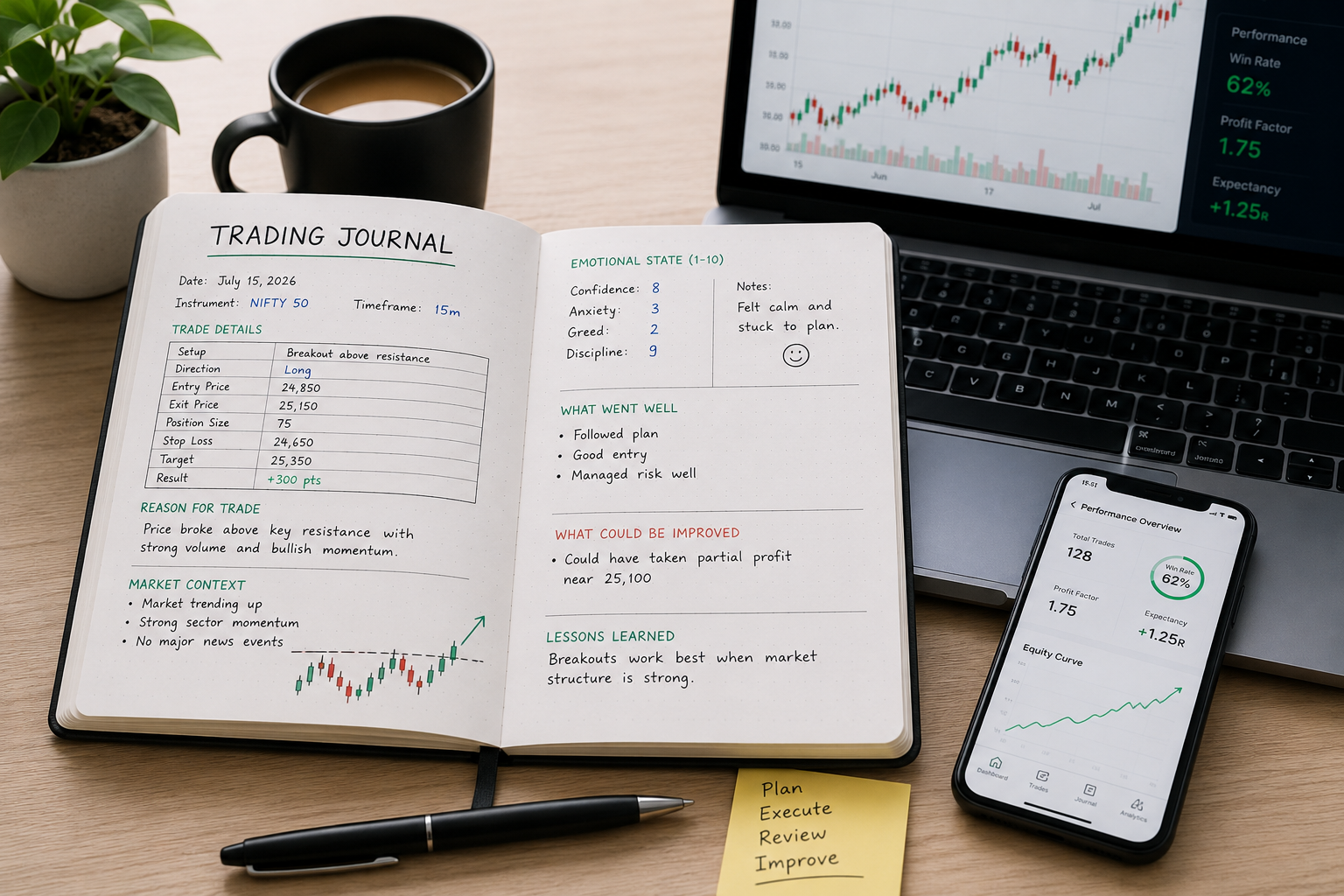
Most traders lose money not because they lack strategy, but because they repeat the same mistakes. A trading journal is the single most effective tool to identify patterns, eliminate emotional trading, and build consistency.
Why Keep a Trading Journal?
Without a journal, trading becomes gambling. You might win occasionally, but you won't understand why. A journal transforms random trades into data you can analyze and improve.
- Track what works and what doesn't
- Identify emotional patterns that lead to losses
- Measure your actual performance objectively
- Build confidence through proven strategies
- Avoid repeating costly mistakes
What to Record in Every Trade
The best trading journals capture both quantitative and qualitative data. Here's what to include:
Essential Trade Data
- ☑ Date and time of entry
- ☑ Asset or symbol traded
- ☑ Entry price and exit price
- ☑ Position size
- ☑ Stop loss and target levels
- ☑ Actual profit or loss
Strategic Context
Numbers alone don't reveal why you took a trade. Document your reasoning:
- What setup or pattern did you see?
- What was your hypothesis?
- What market conditions influenced your decision?
- Did you follow your trading plan?
Emotional State
This is often the most revealing section. Emotional trading destroys accounts. Track:
The market is designed to transfer money from the impatient to the patient.
Warren Buffett
- How confident were you entering the trade? (1-10 scale)
- Were you anxious, fearful, or greedy?
- Did you follow your rules or deviate?
- How did you feel after closing the position?
Manual vs Digital Journals
| Method | Pros | Cons |
|---|---|---|
| Spreadsheet | Free and customizable | Manual data entry, limited analytics |
| Paper Journal | Tactile and personal | Hard to search or analyze patterns |
| Trading Journal Software | Automated tracking and analytics | Learning curve and cost |
Recording this information manually is possible, but dedicated trading journals like TradeGram make reviewing patterns significantly easier. Automated analytics identify what you might miss manually.
How to Review Your Journal Effectively
A journal is only valuable if you review it. Set aside time weekly to analyze your trades:
- Look for patterns in winning trades - what setups consistently work?
- Identify losing patterns - time of day, emotional state, rushed decisions
- Calculate your actual win rate and expectancy
- Review whether you followed your trading plan
- Adjust your strategy based on data, not emotions